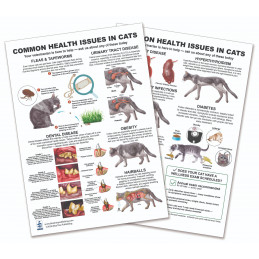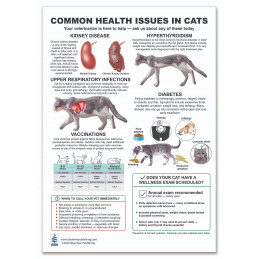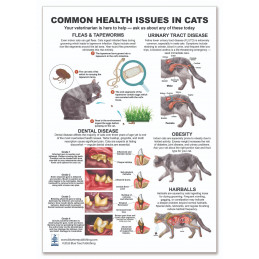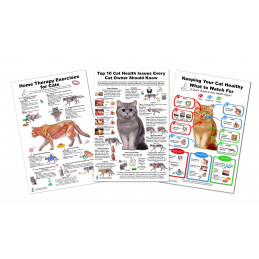

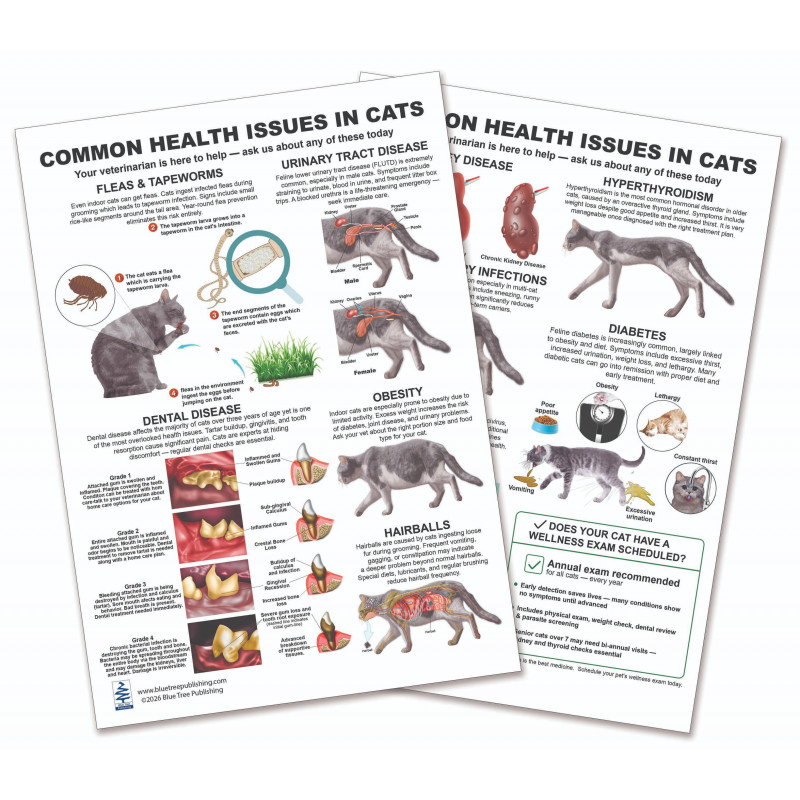
Keep essential feline health information at your fingertips with this comprehensive double-sided A4 laminated reference card from Blue Tree Publishing. Richly illustrated and clearly written, this card is designed for veterinary waiting rooms, exam rooms, and cat owners who want to better understand their pet's health needs.
Side 1 — Fleas, Tapeworms, Dental Disease & More
Fleas & Tapeworms
- Step-by-step illustrated lifecycle showing how cats ingest fleas carrying tapeworm larvae, how tapeworms develop in the intestine, and how eggs are excreted and reingested from the environment
- Signs to watch for including rice-like segments around the tail area
- Importance of year-round flea prevention
Urinary Tract Disease
- Feline lower urinary tract disease (FLUTD) overview — especially common in male cats
- Symptoms including straining to urinate, blood in urine, and frequent litter box trips
- Illustrated male and female urinary anatomy — kidneys, bladder, ureter, urethra, and reproductive structures
- Blocked urethra identified as a life-threatening emergency
Dental Disease
- Four-grade illustrated progression of feline dental disease from early gingivitis through irreversible chronic bacterial infection
- Grade 1 — swollen attached gum, plaque buildup, treatable with home care
- Grade 2 — entire attached gum inflamed, tartar removal needed
- Grade 3 — bleeding gums, calculus and infection destroying tissue, immediate treatment required
- Grade 4 — chronic bacterial infection spreading via bloodstream, potential kidney, liver, and heart damage
- Detailed tooth illustrations showing inflamed gums, sub-gingival calculus, crestal bone loss, gingival recession, and advanced tissue breakdown
Obesity
- Risks of obesity in indoor cats — diabetes, joint disease, and urinary problems
- Guidance on portion size and food type
Hairballs
- Causes, symptoms, and when hairballs indicate a deeper problem
- Illustrated cross-section showing hairball location
- Role of special diets, lubricants, and regular brushing
Side 2 — Kidney Disease, Vaccinations, Diabetes & More
Kidney Disease
- Chronic kidney disease as a leading cause of illness and death in older cats
- Comparison illustration of normal kidney vs chronic kidney disease
- Importance of annual blood and urine testing for cats over seven
Hyperthyroidism
- Most common hormonal disorder in older cats
- Symptoms including weight loss despite good appetite and increased thirst
- Manageable with the right treatment plan once diagnosed
Upper Respiratory Infections
- Highly contagious — especially in multi-cat households and outdoor cats
- Symptoms including sneezing, runny eyes and nose, and lethargy
- Role of vaccination in reducing severity
- Long-term carrier status explained
Diabetes
- Increasingly common — linked to obesity and diet
- Symptoms including excessive thirst, increased urination, weight loss, and lethargy
- Illustrated symptom diagram — obesity, lethargy, poor appetite, vomiting, excessive urination, constant thirst
- Possibility of remission with proper diet and early treatment
Vaccinations
- Core vaccines — FVRCP and Rabies — with full vaccination schedule from 6-8 weeks through annual examinations
- Non-core vaccines including FeLV for outdoor cats
- Illustrated vaccination schedule table
When to Call Your Vet Immediately
- Not eating or drinking for more than 24 hours
- Straining to urinate or no urine produced
- Pale, blue, or white gums
- Suspected poisoning or ingestion of toxic substance
- Difficulty breathing, wheezing, or persistent coughing
- Sudden collapse, seizures, or loss of consciousness
- Severe vomiting or diarrhea — especially with blood
- Eye injury, sudden blindness, or rapid eye changes
Does Your Cat Have a Wellness Exam Scheduled?
- Annual exam recommended for all cats
- Early detection saves lives — many conditions show no symptoms until advanced
- Includes physical exam, weight check, dental review, and parasite screening
- Senior cats over 7 may need bi-annual visits — kidney and thyroid checks essential
The wipe-clean laminated surface withstands repeated handling and is easy to sanitize — perfect for busy veterinary clinics and cat owners alike.
For educational purposes only. Not a substitute for professional veterinary advice.