Reference: 4111091

Ear Nose Throat ENT Large poster

(0)
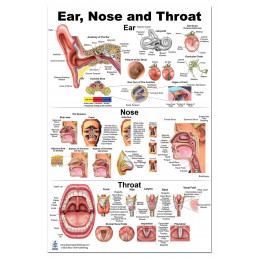
Large format 26x36 inch ENT anatomy poster — ideal for exam room and clinic walls Detailed illustrations of ear, nasal cavity, and throat structures Professional quality print for ENT clinics, hospitals, and medical schools Clear anatomical labels for both clinician reference and patient education Durable construction designed for daily clinical...
$26.99
More
Last items in stock

Reference: 5101131

TAF Test of Auditory Functioning — Professional Auditory Assessment for Children Who Are Deaf or Hard of Hearing

(0)
A criterion-based auditory assessment tool for children ages 2 through middle school with hearing loss. Includes 172-page illustrated easel, 19 subtests, QR code audio clips, and free downloadable score sheets and manual. Designed for educational audiologists, speech-language pathologists, and teachers of the deaf.
$269.99
More
In stock
All best sellers
  • New
Professional A4 clipboard with a removable double-sided diabetes chart covering blood sugar levels, Type 1, Type 2 and Gestation
  • Professional A4 clipboard with a removable double-sided diabetes chart covering blood sugar levels, Type 1, Type 2 and Gestation
  • Professional A4 clipboard with a removable double-sided diabetes chart covering blood sugar levels, Type 1, Type 2 and Gestation
  • Understanding Diabetes Clipboard — Durable A4 Clipboard with Removable Double-Sided Chart
  • Understanding Diabetes Clipboard — Durable A4 Clipboard with Removable Double-Sided Chart
  • Understanding Diabetes Clipboard — Durable A4 Clipboard with Removable Double-Sided Chart
  • Professional A4 clipboard with a removable double-sided diabetes chart covering blood sugar levels, Type 1, Type 2 and Gestation

Understanding Diabetes Clipboard — Durable A4 Clipboard with Removable Double-Sided Chart

44440dia

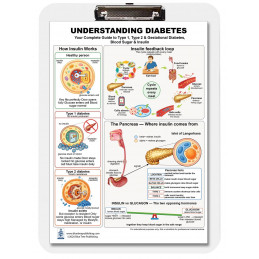
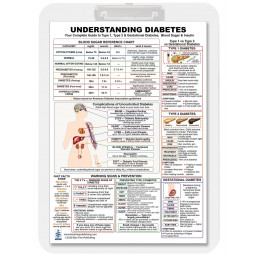
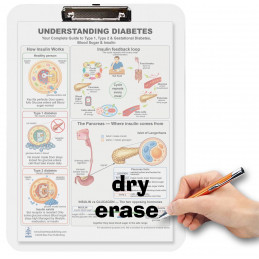
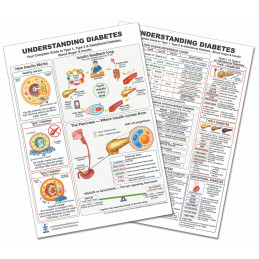
A professional-grade A4 clipboard bundled with a removable double-sided diabetes reference chart. Side 1 covers blood sugar reference chart, complications of uncontrolled diabetes, Type 1 vs Type 2 vs Gestational Diabetes comparison, warning signs, and prevention. Side 2 covers how insulin works, the insulin feedback loop, pancreas anatomy, and insulin vs glucagon. The fully removable chart can be used independently or replaced as needed — ideal for diabetes clinics, endocrinology offices, and patient education.

$21.99
Delivered 7-10 days
Quantity
15 Items

  Security policy

Payment transactions utilize SSL or TLS protocols

  Delivery policy

Packages are generally dispatched within 2 days after receipt of payment and are shipped via USPS

  Return policy

14 day return window. Contact us for return authorization.

Description

Combining function with diabetes education, the Understanding Diabetes Clipboard pairs a sturdy professional A4 clipboard with a detailed double-sided reference chart — everything a diabetes clinic, endocrinology office, or primary care practice needs to support patient education and understanding.

The Clipboard

  • Durable A4 hardboard clipboard with smooth, reliable clip mechanism
  • Lightweight and portable — ideal for exam rooms, waiting rooms, patient consultations, and home visits
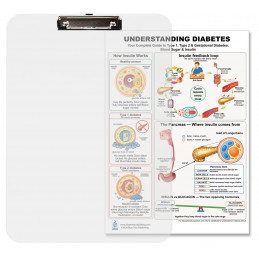
  • Fully removable chart attaches and detaches cleanly without damage

The Chart — Side 1: Blood Sugar, Complications, Types & Prevention

Blood Sugar Reference Chart

  • Complete blood sugar reference table covering mg/dL, mmol/L, and HbA1c values
  • Hypoglycemia — below 70 mg/dL — treat with fast sugar immediately
  • Normal — 70-99 mg/dL — healthy range, maintain with diet and exercise
  • Normal After Eating — below 140 mg/dL — healthy post-meal range
  • Prediabetes Fasting — 100-125 mg/dL — at risk, lifestyle changes can prevent progression
  • Prediabetes Post-meal — 140-199 mg/dL — impaired glucose tolerance, see your doctor
  • Diabetes Fasting — 126+ mg/dL — diabetes confirmed, medical management essential
  • Diabetes Post-meal — 200+ mg/dL — significantly elevated, requires immediate medical attention
  • Hyperglycemic Crisis — 300+ mg/dL — EMERGENCY, call 911, diabetic ketoacidosis risk
  • Values based on American Diabetes Association guidelines

Complications of Uncontrolled Diabetes

  • Brain — cognitive decline, increased risk of dementia by up to 73% including Alzheimer's disease
  • Eyes — diabetic retinopathy, leading cause of blindness in working-age adults
  • Heart — cardiovascular disease, double the risk of heart attack and stroke
  • Liver — fatty liver disease, up to 70% of Type 2 diabetics affected
  • Kidneys — diabetic nephropathy, leading cause of kidney failure worldwide
  • Blood vessels — peripheral vascular disease
  • Neuropathy — nerve damage, tingling and numbness
  • Feet — diabetic foot disease, poor circulation and nerve damage can lead to ulcers and amputation
  • Key message: controlling blood sugar can prevent or delay ALL of these complications

Type 1 vs Type 2 vs Gestational Diabetes

Type 1 Diabetes:

  • Autoimmune system attacks and destroys beta cells, no insulin produced
  • Who — any age, commonly children and young adults
  • Cause — autoimmune attack
  • Insulin — must take insulin daily
  • Prevention — cannot be prevented
  • Cure — no cure currently
  • Prevalence — approximately 10% of all diabetes
  • Symptoms — frequent urination, extreme thirst, extreme fatigue, blurred vision, unexplained weight loss, fruity breath odor

Type 2 Diabetes:

  • Most common form — cells become resistant to insulin, pancreas overworks then produces less
  • Who — usually adults, increasingly younger ages
  • Cause — insulin resistance
  • Risk — diet, inactivity, genetics
  • Treatment — lifestyle, medication, oral drugs or insulin
  • Reversible — can often be put into remission
  • Prevalence — approximately 90% of all diabetes
  • Symptoms — often no symptoms initially, increased thirst and urination, slow healing wounds, tingling in hands and feet, fatigue, darkened skin patches

Gestational Diabetes:

  • Develops during pregnancy — hormones block insulin action raising blood sugar
  • Who — 2-10% of pregnancies
  • Timing — 2nd or 3rd trimester
  • Treatment — diet, exercise, blood sugar monitoring
  • After birth — usually resolves after delivery
  • Future risk — 50% chance of developing Type 2
  • Symptoms — often no symptoms, found by screening, frequent urination, fatigue, increased thirst

Warning Signs & Prevention

The 4 T's — Warning Signs of Diabetes:

  • Toilet — urinating more than usual especially at night
  • Thirsty — excessive thirst that is never fully satisfied
  • Tired — extreme unexplained fatigue and lack of energy
  • Thinner — unexplained weight loss despite normal appetite

Preventing Type 2 Diabetes:

  • Weight — even 5-7% weight loss reduces diabetes risk by 58%
  • Exercise — 150 min/week moderate exercise dramatically improves insulin sensitivity
  • Diet — reduce processed foods, sugar, and refined carbohydrates
  • Fiber — high fiber diet slows glucose absorption and reduces blood sugar
  • Smoking — quitting smoking reduces diabetes risk significantly
  • Alcohol — limit alcohol, excess impairs insulin sensitivity
  • Screening — regular blood sugar checks after age 40 or if risk factors present
  • Sleep — poor sleep increases insulin resistance, aim for 7-9 hours per night

Fast Facts Strip:

  • 589 million adults with diabetes — 1 in 9
  • Diabetes causes over 3.4 million deaths annually
  • 252 million undiagnosed worldwide
  • 80% of Type 2 diabetes is preventable
  • #1 cause of blindness in working-age adults and non-traumatic amputation
  • Over $1 trillion annual global cost

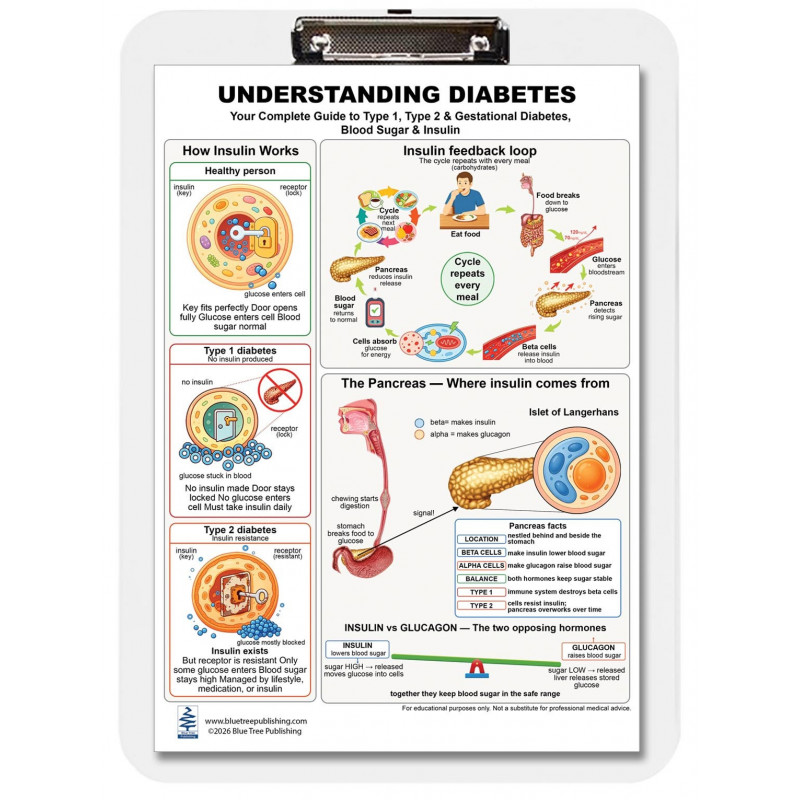
The Chart — Side 2: How Insulin Works, Feedback Loop & Pancreas

How Insulin Works

  • Healthy person — insulin acts as a key, receptor as a lock, glucose enters cell, blood sugar normal
  • Type 1 diabetes — no insulin produced, door stays locked, no glucose enters cell, must take insulin daily
  • Type 2 diabetes — insulin exists but receptor is resistant, only some glucose enters cell, blood sugar stays high, managed by lifestyle, medication, or insulin

Insulin Feedback Loop

  • Complete illustrated cycle — food breaks down to glucose, enters bloodstream, pancreas detects rising sugar, beta cells release insulin, cells absorb glucose for energy, blood sugar returns to normal, cycle repeats every meal

The Pancreas — Where Insulin Comes From

  • Detailed pancreas anatomy — location nestled behind and beside the stomach
  • Islet of Langerhans — beta cells make insulin to lower blood sugar, alpha cells make glucagon to raise blood sugar
  • Pancreas facts — location, beta cells, alpha cells, balance, Type 1 and Type 2 effects explained

Insulin vs Glucagon — The Two Opposing Hormones

  • Insulin — lowers blood sugar, released when sugar is HIGH, moves glucose into cells
  • Glucagon — raises blood sugar, released when sugar is LOW, liver releases stored glucose
  • Together they keep blood sugar in the safe range

The fully removable chart means you can hand it to a patient, display it on a wall, or use it independently — and replace it whenever you need a fresh copy.

For educational purposes only. Not a substitute for professional medical advice.

Product Details
44440dia
15 Items

Data sheet

Composition
Clear plastic insertable
Not watertight
Size
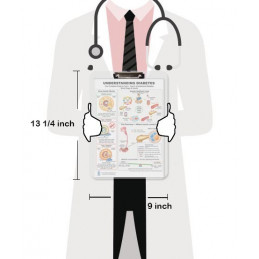
9 in x 13 1/4 in nominal
Paper Type
Double Sided
Comments (0)
Grade
No customer reviews for the moment.
16 other products in the same category:

Reference: 44448362nd

Brand: Blue Tree Publishing

Common Health Issues in Cats Clipboard — Durable A4 Clipboard with Removable Double-Sided Chart

(0)
A professional-grade A4 clipboard bundled with a removable double-sided cat health reference chart. Side 1 covers fleas and tapeworms, urinary tract disease, dental disease, obesity, and hairballs. Side 2 covers kidney disease, hyperthyroidism, upper respiratory infections, diabetes, vaccinations, when to call your vet immediately, and wellness exam...
$21.99
More
In stock

Reference: 44440spine

Brand: Blue Tree Publishing

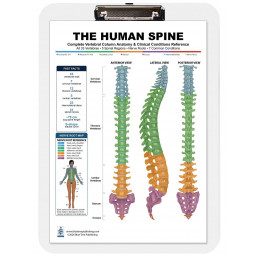
Spine Health Clipboard — Durable A4 Clipboard with Removable Double-Sided Chart

(0)
A professional-grade A4 clipboard bundled with a removable double-sided spine health chart. Covering vertebral anatomy on one side and common spinal conditions and posture guidance on the other, this clipboard is a practical tool for clinicians, therapists, educators, and students. The fully removable chart can be used independently or replaced as needed,...
$21.99
More
In stock
You might also like

Reference: 410117sleep

Brand: Blue Tree Publishing

The Science of Sleep — Laminated A4 Double-Sided Educational Chart

(0)
Discover what really happens when you close your eyes! This beautifully illustrated double-sided laminated A4 chart covers sleep cycles, brain activity, body systems during sleep, sleep disorders, sleep recommendations by age and 10 tips for better sleep. Perfect for bedrooms, classrooms, clinics and healthcare offices. A complete visual guide to...
$14.99
More
In stock

Reference: 4101177 db

Brand: Blue Tree Publishing

Understanding Diabetes — Laminated Double-Sided A4 Reference Card

(0)
A comprehensive double-sided A4 laminated reference card covering Type 1, Type 2, and Gestational Diabetes. Side 1 covers blood sugar reference chart, complications of uncontrolled diabetes, Type 1 vs Type 2 vs Gestational Diabetes comparison, warning signs, and prevention. Side 2 covers how insulin works, the insulin feedback loop, pancreas anatomy, and...
$14.99
More
In stock

Follow us on Facebook